 Clay
Clay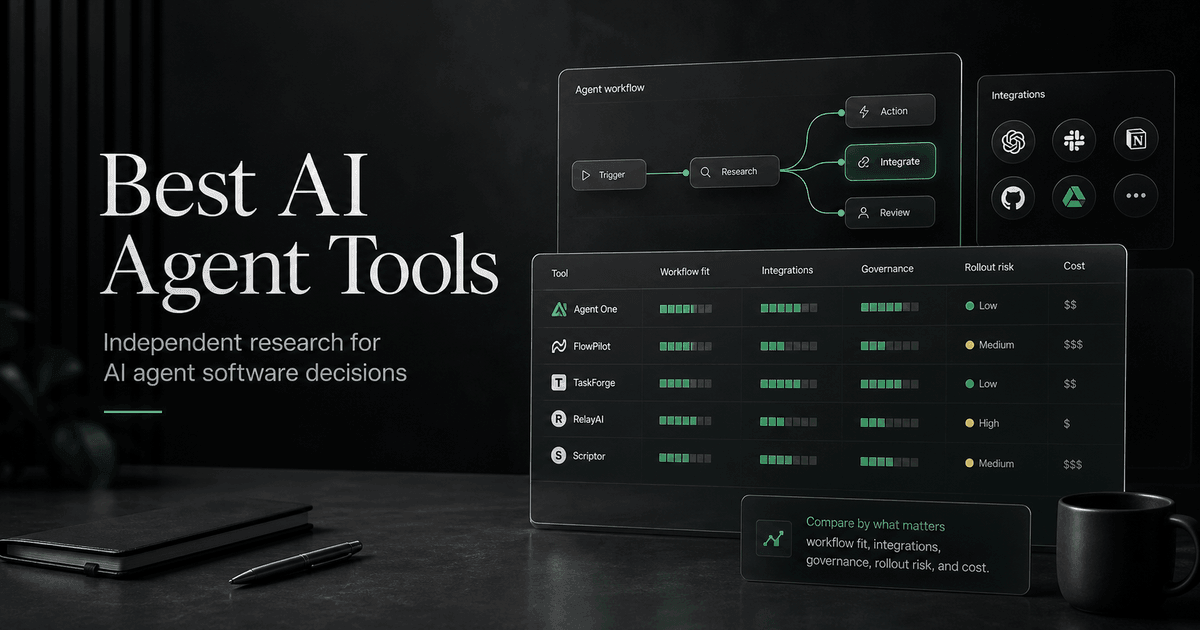
Our verdict
Strong GTM orchestration layer if you will own the tables
Clay earns a serious look when enrichment quality and workflow flexibility matter more than a single-vendor database UI. The product combines a spreadsheet-like table builder, multi-provider waterfalls, Claygent AI research, signals for job changes and web intent, native email sequencing, CRM auto-sync on Growth, data warehouse connectors, and ad audience pushes. Customers cited on clay.com include Anthropic, OpenAI, Rippling, Intercom, and Verkada with outcome claims such as higher enrichment rates and outbound pipeline lift. Those are vendor case studies, not your pilot results.
The buying mistake is treating Clay like a cheaper Apollo replacement without assigning an operator. Waterfalls save data spend when provider A misses, but each step can consume Actions and Data Credits. Claygent and frontier AI models add variable token-based credit burn on top. Free tier allows experimentation with 500 Actions and 100 Data Credits per month, but caps tables at 200 rows. Production outbound or CRM sync usually means Launch or Growth with tier expansion as volume grows.
Wie wir das bewertet haben
This is a desk review against Clay's public product and pricing surfaces, not a paid production rollout on a customer CRM. On August 20, 2026 we opened clay.com, clay.com/pricing, the pricing FAQ, and Clay University docs on Actions, Data Credits, and AI pricing. We cross-read our Apollo.io review und Artisan AI review for adjacent outbound economics. We did not run a live Clay table on a production CRM, audit SOC 2 Type II, or verify enrichment match rates on a specific ICP.
Consult Offizielle Produktseite, Official pricing page, Actions and Data Credits docs, AI pricing docs for product documentation and plan details. Confirm the terms that apply to your purchase.
Kostenmodell
Waterfall columns multiply Actions. Data Credits are the vendor bill Clay consolidates.
Clay separates platform work from data purchase. Aktionen meter orchestration: running a row, calling a provider, executing a formula, pushing to CRM, or exporting. Data Credits meter marketplace data and most AI usage: emails, phones, firmographics, Claygent research, and fixed-price model runs. Clay's FAQ states that if enrichment returns no result, you are not charged Data Credits or Actions. If you bring your own API keys, you skip Data Credits and pay Actions only. That BYOK path is the main lever when you already pay ZoomInfo, Apollo, or Clearbit directly.
The expensive pattern is a wide waterfall on a large table without modeling. Suppose a 5,000-row outbound list uses three enrichment providers in sequence plus Claygent research and two AI formatting columns before CRM sync. A naive assumption of one Action per row fails quickly. Each provider attempt, AI call, and export can stack. Data Credits burn on every successful marketplace hit; variable frontier models show estimated credits with a tilde and finalize after the run.
- Model columns, not rows alone. List 5,000 accounts, then count enrichment steps, AI columns, signal triggers, and sync jobs per row before you pick a Launch or Growth tier.
- Launch versus Growth is a feature gate, not just volume. Growth adds CRM auto-sync, HTTP API, webhooks, web intent signals, warehouse connectors, and unlimited ad audiences. If you need those, starter Launch pricing is irrelevant.
- Annual billing saves about 10 percent on the public page toggle. Launch starts at about $54 per month billed annually versus about $60 monthly for the same 15,000 Actions and 3,000 Data Credits entry bundle.
- Data Credits roll over; Actions reset. Launch and Growth bank unused Data Credits up to 2x monthly allocation per FAQ. Actions reset each cycle. Plan Action tier upgrades before peak campaigns.
- Top-ups carry a premium. Launch and Growth can buy extra Data Credits at about 30 percent above plan rate. Enterprise top-ups are custom.
Worked example: a Growth team on the entry bundle (about $185 per month annual) doubles Claygent research on 2,000 accounts for one week. Variable AI may spike Data Credits while Actions stay flat. Recurring spikes mean expanding the credit tier on the pricing slider beats 30 percent top-ups. Compare the all-in figure to Apollo.io seat-plus-credit math plus any sequencer cost.
Who Clay fits best
Stärken
- Multi-provider waterfalls. Chain 150+ data sources so a miss on provider A falls through to B and C instead of stopping the row.
- Claygent research agent. Web-grounded account and people research with custom prompts, useful for fields no vendor sells outright.
- Signals and Audiences. Job changes, company news, social listening, and web intent on Growth, combined into audience builds for outbound or ads.
- CRM and warehouse sync on Growth. Auto-enrich Salesforce or HubSpot records and connect Snowflake, BigQuery, Postgres, Databricks, or Fivetran per Clay's comparison table.
- Execution layer expansion. Native sequencer, integrations to external sequencers, LinkedIn and Meta ad audience pushes, and custom functions reusable across tables.
- Unlimited seats on public plans. Pricing FAQ emphasizes unlimited seats and tables, which helps agencies and large GTM teams without per-seat tax on collaborators.
Zu überprüfende Einschränkungen
- Operator skill required. Clay rewards GTM engineers, not rep-self-serve database browsing.
- Dual-meter complexity. Actions and Data Credits confuse finance without an owner. Variable AI adds estimate versus actual variance.
- Not an autonomous SDR. Clay orchestrates data; it does not package reply autonomy like Artisan AI.
- Tier gates. Phone enrichment on Launch+; CRM sync and HTTP API on Growth+; SSO, RBAC, and bulk enrichment on Enterprise.
- Free row cap. 200 rows per table is for learning, not production outbound.
Surfaces to verify
Clay surfaces are tables, integrations, APIs, sequencers, and ad platforms. They are not WhatsApp support or website chat widgets. Map each system your enriched data must reach before you sign.
- Clay tables and workbooks: column formulas, waterfalls, scheduled runs, version history (1 month on Launch and Growth, 6 months on Enterprise).
- Data marketplace: 150+ providers for email, phone, firmographic, technographic, and social fields. Confirm coverage for your territories and industries.
- Claygent and AI columns: fixed-credit models versus variable token-priced frontier models. Check tilde estimates on sample rows.
- CRM integrations: Salesforce, HubSpot, and others via Growth. Test create versus update rules and duplicate handling.
- Sequencer: native Clay email sends on Free; external sequencer integrations on paid tiers. Confirm deliverability ownership stays with your domain.
- Ad platforms: LinkedIn, Meta, and Google audience sync on Growth with unlimited ad audiences.
- HTTP API and webhooks: Growth and Enterprise for custom stack connections and signal automation.
- Clay MCP and agent plugin: expose Clay data inside rep AI tools via MCP or CLI/API.
GTM workflow and handoff
The intended Clay loop starts with a source list: CRM segment, CSV, warehouse query, or Audience built from signals. Columns waterfall enrichment and Claygent research until each row meets your quality bar. Formulas score or personalize. Approved rows sync to a sequencer, CRM, or ad platform. The buying question is whether that loop produces accurate enough data at a predictable meter cost, and whether downstream tools receive clean field mapping.
Test three failure modes: bad enrichment that poisons sequences, CRM duplicates from weak sync rules, and meter shock when signal tables re-run daily. Clay's credit dashboard helps only if RevOps reviews it weekly. Compare Artisan AI for packaged autonomous outbound and Apollo.io for rep-operated search when enrichment architecture is not the bottleneck.
Pricing checked August 20, 2026
Clay pricing: Free through Enterprise on Actions and Data Credits
Clay publishes four commercial tiers on clay.com/pricing with a monthly versus annual toggle (annual saves about 10 percent). Each paid tier exposes expandable Action and Data Credit bundles on the pricing slider. Headline card prices on the page (about $167 for Launch and about $446 for Growth when annual is selected) reflect default mid-tier bundles, while FAQ copy cites Launch starting at about $185 per month and Growth at about $495 per month with 15,000 and 40,000 Actions respectively. Treat the slider and FAQ together: entry bundles start lower and scale up as you add Actions and credits.
| Planen | Public price | Included capacity / meter | Beste Passform |
|---|---|---|---|
| Kostenlos | $0no card required for trial path | 500 Actions/mo and 100 Data Credits/mo (6,000 Actions/yr and 1,200 Data Credits/yr on annual view); unlimited seats; up to 200 rows per table; waterfalls, Claygent, Clay sequencer email, BYOK | Learning workflows and vendor comparison before paid commit |
| Starten | From about $54/mobilled annually; about $60/mo monthly at entry bundle; FAQ cites from about $185/mo; mid-tier card about $167/mo annual | From 15,000 Actions/mo and 3,000 Data Credits/mo (FAQ cites 2,500 credits on some bundles); phone enrichment; signals; email campaign integrations; 50,000 rows per table; custom functions; expandable tiers to 200,000 Actions/mo | Small teams automating first prospecting and enrichment plays |
| Wachstum | From about $185/mobilled annually; about $205/mo monthly at entry bundle; FAQ cites from about $495/mo; mid-tier card about $446/mo annual | From 40,000 Actions/mo and 6,000 Data Credits/mo; CRM auto-sync; HTTP API; webhooks; web intent signals; warehouse connectors; up to 250k Audience imports; unlimited ad audiences; priority support | Teams scaling CRM-backed GTM with signals and ads |
| Unternehmen | Benutzerdefiniertannual commitment per FAQ | From 100,000+ Data Credits and 200,000+ Actions/mo; unlimited Audiences and bulk enrichment; SSO; RBAC with workbook credit budgets; dedicated growth strategist; Slack support; custom credit rollover up to 15% of prior year on renewal | Large orgs with security, bulk, and co-build requirements |
Overages: Data Credit top-ups at about 30 percent premium on Launch and Growth; Action tier upgrades within plan; Enterprise bulk data and custom rollover. Data Credits list from about $0.05 each; Actions under one cent at scale. AI is fixed-credit on native models or variable on frontier models per Clay FAQ. BYOK uses Actions only.
Source: Clay official pricing page and FAQ captured August 20, 2026. Confirm live slider selections, taxes, top-up rates, and Enterprise quotes in-app before purchase. Use Clay's pricing calculator for scenario modeling.
AI capability: Claygent, formulas, and variable frontier models
Clay's AI layer spans Claygent (web research agent), AI formatting formulas, and model columns inside tables. Clay positions Claygent for custom data points that standard vendors do not sell, such as localized research, narrative account summaries, or proof points scraped from public sources. That is different from a conversational support bot or an autonomous email replier.
Pricing splits AI into fixed-credit tasks (classification, short summaries, templated generation) and variable-credit frontier runs billed on actual tokens without markup per Clay's August 2026 FAQ. Variable models display an estimated credit count with a tilde; Clay states about 75 percent of runs cost less than the estimate. Teams running heavy Claygent on every row should pilot variable spend on 100 rows before scaling.
Compared to Copy.ai, Clay AI columns feed structured tables and downstream sync, not a standalone GTM content workspace. Compared to Artisan AI, Clay does not package reply autonomy and meeting booking. Compared to Apollo.io, Clay AI is column-level enrichment and research, not sequence drafting inside a rep prospecting inbox.
Feature areas to verify in a pilot
Use this checklist during a 14-day trial or demo workspace. Ask Clay to run each item on your CRM export, not a sanitized sample table.
- Waterfall three email providers on 200 ICP rows: hit rate, duplicates, credit burn.
- Claygent on 20 accounts: factual accuracy before copy references it.
- CRM sync on Growth: create, update, and skip rules.
- Signal table with webhook to Slack or sequencer; measure recurring Action burn.
- Credit dashboard export for finance; table version restore after a bad edit.
Analytik und Betriebstransparenz
Clay provides a credit reporting dashboard on all plans. Track cost per enriched qualified account, Data Credits by provider column, Actions by sync job, and variable AI variance. Signal tables that re-run on every trigger are a common surprise invoice if nobody reviews usage weekly. Vendor case study lifts are directional, not your forecast.
Security, data handling, and compliance
Clay's pricing page lists SOC 2 Type II, GDPR, CCPA, ISO 27001, and ISO 42001 badges. Enterprise adds SSO, RBAC, custom CSA and DPA, dedicated Slack support, and workbook-level credit budgets. Request the current SOC 2 report, DPA, subprocessors, and data retention policy from Clay's Trust Center before connecting production CRM or warehouse credentials.
- Request SOC 2, DPA, subprocessors, and retention policy from Trust Center.
- Map RBAC if agencies access production tables; verify DNC sync to sequencers and ads.
- Confirm training-data policy for enriched contact fields and AI prompts.
What questions should you ask before buying Clay?
- What Action and Data Credit bundle matches our top three tables after a 1,000-row pilot?
- How do top-ups price versus expanding the slider tier mid-contract?
- Which providers cover our industries and geographies?
- Can we cap Claygent and variable AI spend per workbook?
- How do scheduled signal tables behave when triggers fire daily?
- Who owns deliverability for Clay sequencer versus external tools?
- What onboarding is included on Enterprise versus self-serve Launch?
What red flags should you watch for with Clay?
- Nobody on the team can explain Actions versus Data Credits to finance.
- The demo table uses US SaaS accounts while your ICP is EU manufacturing or healthcare with stricter fields.
- CRM sync is promised but Growth tier was not included in the quote.
- Claygent runs on every row with frontier models before a fixed-model template exists.
- Waterfall depth exceeds three providers without measuring diminishing hit rate.
- Leadership expects Clay to replace reps or autonomous outbound like Artisan AI without building sequences elsewhere.
- You only needed Apollo.io search and dialer for five reps with no RevOps owner.
What are the best alternatives to Clay?
Pick by whether the bottleneck is data orchestration, rep-operated prospecting, autonomous outbound, or copy generation. Clay is not an alternative to itself.
- Apollo.ioChoose Apollo when reps need search, sequences, and dialer in one human-operated workspace with seat-plus-credit pricing, not a multi-vendor enrichment spreadsheet.
- Artisan AIChoose Artisan when leadership wants a packaged AI BDR (Ava) for autonomous prospecting, reply handling, and meeting booking rather than building tables and sync jobs.
- Copy.aiChoose Copy.ai when the job is GTM content and workflow credits for messaging and research encoding, and you already own data vendors and sequencing elsewhere.
- How to choose an AI agent platformChoose that guide when you need cross-category evaluation criteria for governance, meters, and workflow fit beyond sales enrichment.
Workflow test
What Clay needs to prove in a real GTM workflow
A polished demo table on familiar logos is not procurement evidence. Run this four-step test on your CRM export and territories.
- Baseline enrichment.Take 500 accounts from your CRM. Waterfall email and phone columns. Measure hit rate, duplicates, and credits consumed versus the same list in Apollo.io or your incumbent vendor.
- Research column.Run Claygent on 50 high-priority accounts. Have sales review factual accuracy and usefulness of the output before any email copy references it.
- Sync and act.Push approved rows to CRM and one sequencer or ad audience. Confirm field mapping, suppression, and that Actions burn matches the forecast.
- Forecast the meters.Extrapolate monthly Actions and Data Credits including signal re-runs. Compare Launch versus Growth feature gates and annual versus monthly billing before sign-off.
Continue the decision
Verwandte Lektüre
- Apollo.io reviewCompare seat-plus-credit prospecting and rep-operated sequences against Clay's enrichment orchestration model.
- Artisan AI reviewCompare packaged autonomous BDR outbound against Clay's operator-led workflow tables.
- Copy.ai reviewCompare GTM copy workflow pricing when messaging generation is the primary job.
- How to choose an AI agent platformApply shared buyer criteria across agent and automation categories.
- Tools directoryBrowse adjacent sales, outbound, and GTM tools on one list.
- AI agent buyer scorecardTurn the four-step Clay test into a written go or no-go.
Anspruchs- und Quellenbuch
Worauf dieses Profil basiert
Clay homepage and pricing page reviewed August 20, 2026. Recorded Free at 500 Actions and 100 Data Credits monthly; Launch entry bundles at about 15,000 Actions and 3,000 Data Credits from about $54 per month annual or about $60 monthly; Growth entry bundles at about 40,000 Actions and 6,000 Data Credits from about $185 per month annual or about $205 monthly; Enterprise custom with 100,000+ credits and 200,000+ Actions cited in FAQ. Documented waterfalls across 150+ providers, Claygent, signals, CRM and warehouse sync on Growth, ad audience pushes, 10 percent annual discount toggle, Data Credit rollover up to 2x monthly on Launch and Growth, 30 percent top-up premium, BYOK consuming Actions only, and SOC 2 Type II plus ISO badges on the pricing page.
Was wir nicht überprüft haben
We did not run a paid production table against customer CRM data, obtain an Enterprise quote, independently audit SOC 2 Type II or ISO certificates, measure enrichment accuracy by country or industry, or test native sequencer deliverability on customer domains. We did not reconcile every FAQ dollar figure with every slider bundle on the pricing page. Buyers should confirm live selections in-app and request Trust Center documents before connecting production systems.
Wie wir gepasst haben
Editorial fit weights multi-vendor enrichment depth, signal and CRM workflow coverage, dual-meter cost clarity, operator skill requirements, and integration surface for sequencers, ads, and warehouses. It is not a pipeline lift benchmark, user satisfaction score, or vendor-provided ROI claim.
Should you choose Clay?
Clay is a GTM data enrichment and orchestration platform for teams that treat prospecting data as a workflow engineering problem. Public pricing as of August 20, 2026 starts at $0 on Free, from about $54 per month billed annually on Launch, and from about $185 per month billed annually on Growth, with Aktionen und Data Credits as the two meters that matter. Enterprise is custom for SSO, bulk enrichment, and dedicated strategy support.
Choose Clay when waterfalls, Claygent research, CRM or warehouse sync, and signal-driven audiences are central to your pipeline motion and someone will own table design and meter forecasting. Look elsewhere when Apollo.io covers rep-operated prospecting, when Artisan AI matches autonomous outbound requirements, or when Copy.ai is enough for copy without enrichment architecture. Run the four-step workflow test on your accounts before annual commit.
FAQ
Häufige Fragen
What is Clay best used for?
Clay is best for GTM teams that need to enrich accounts and contacts across multiple data vendors, run AI research with Claygent, react to signals like job changes, and sync results to CRM, sequencers, warehouses, or ad platforms. It is an orchestration layer for RevOps and growth engineers, not a support chatbot or a fully autonomous SDR.
How much does Clay cost in August 2026?
Clay's public pricing page lists Free at $0 with 500 Actions and 100 Data Credits per month, Launch from about $54 per month billed annually (about $60 monthly) with entry bundles around 15,000 Actions and 3,000 Data Credits, Growth from about $185 per month billed annually (about $205 monthly) with entry bundles around 40,000 Actions and 6,000 Data Credits, and Enterprise as custom. Expandable tiers and FAQ headline prices go higher. Confirm the live slider before purchase.
What are Actions versus Data Credits?
Actions measure platform orchestration such as running enrichments, formulas, syncs, and exports. Data Credits pay for marketplace data and most AI usage. Failed enrichments charge neither per Clay FAQ. BYOK runs consume Actions only. Data Credits can roll over up to 2x monthly allocation on Launch and Growth; Actions reset each billing cycle.
Does Clay replace Apollo.io?
Partially overlap, different center of gravity. Apollo combines database, sequences, and dialer for rep-operated outbound. Clay combines multi-vendor enrichment and workflow sync. Many teams use Clay to improve data quality then push to Apollo or another sequencer. Read our Apollo.io review for seat-plus-credit economics.
Can Clay send outbound email?
Clay includes a native sequencer and integrations to external email tools. Free users can send with Clay's sequencer. Deliverability, domain warmup, and compliance remain your responsibility. Clay orchestrates data; it does not remove the need for a sending strategy.
What is Claygent?
Claygent is Clay's AI research agent with web access. It generates custom account or people fields that standard vendors may not sell, consuming Data Credits under fixed or variable AI pricing depending on the model.
Which plan includes CRM sync?
Growth and Enterprise include CRM auto-sync and enrichment per the plan comparison. Launch covers prospecting automation and signals but not CRM auto-sync or HTTP API. Confirm field mapping in a pilot.
Clay vs Artisan AI?
Choose Clay when you will build enrichment and sync tables with a RevOps operator. Choose Artisan AI when you want Ava, a packaged AI BDR for autonomous prospecting through meeting booking with sales-scoped lead-volume pricing.
Clay vs Copy.ai?
Choose Copy.ai for GTM content workflows and messaging credits. Choose Clay when structured enrichment, waterfalls, and CRM or ad sync drive the use case.
Who should skip Clay?
Teams without RevOps or GTM engineering capacity, organizations that only needed a simple contact database, buyers expecting fully autonomous outbound without workflow setup, and companies unwilling to monitor dual-meter usage monthly.