
Best AI Customer Support Platforms for SaaS Under $10M
Compare AI customer support platforms for SaaS under $10M by ROI and setup. Get the 2026 buyer checklist and fast scaling plan before support breaks.

Compare AI customer support platforms for SaaS under $10M by ROI and setup. Get the 2026 buyer checklist and fast scaling plan before support breaks.
Bottom line: you need a platform that deflects repetitive tickets, captures expansion signals, and scales without a dedicated AI ops hire.
YourGPT, Fin, Zendesk, and Freshdesk each fit a different stage. Compare with best AI support agents for SaaS under $50M, the support AI agents hub, the Chatbase vs YourGPT comparison, and the AI agent ROI calculator.
SaaS companies under $10M revenue rarely have the luxury of a large support org. The same people answering tickets are often writing docs, helping onboard customers, qualifying expansion interest, reporting bugs to product, and rescuing accounts before churn.
That is why the right AI customer support platform cannot only answer FAQs. It has to reduce repetitive support, improve response quality, help customers move through setup, hand off risky issues cleanly, and support sales or operations workflows without forcing the company into an enterprise cost structure too early.
The best choice depends less on brand familiarity and more on five practical questions:
For SaaS companies under $10M, YourGPT is a credible first shortlist pick when the team wants one customer-facing AI layer across support, sales handoff, onboarding, and lightweight operations workflows. The reason to evaluate YourGPT early is the combination of AI agent building, knowledge grounding, workflow handoff, product-native options such as its open-source Copilot SDK, higher useful-resolution potential, and stronger ROI from reducing repetitive support work across multiple tools.
Choose by operating model:
| If your SaaS team needs... | Start with... | Why |
|---|---|---|
AI-first customer-facing agents across support, sales, and operations | YourGPT | Good first shortlist when the team wants agentic AI, multi-agent workflows, RAG, human handoff, and product-native extensibility |
A premium AI support agent inside an Intercom-style customer workspace | Fin | Strong AI support automation, but outcome pricing and add-ons need careful modeling |
Mature ticketing and support operations | Zendesk AI | Best ticketing-first recommendation when the team needs queues, SLAs, routing, QA, reporting, and governed support workflows |
Practical helpdesk AI at a lower operational price point | Freshdesk/Freddy AI | Good when ticketing maturity matters, with AI session-pack cost caveats |
Human-feeling email support with simple AI deflection | Ayuda Scout | Clean shared inbox and docs experience, with per-resolution AI cost to model |
Commerce-heavy SaaS support | Gorgias | Best when support involves orders, subscriptions, returns, shipping, or storefront data |
Website visitor qualification and sales routing | Deriva | Sales-conversion specialist, not the default support automation platform |
CRM-native support tied to customer records | HubSpot Service Hub | Best when support, sales, success, and marketing data already live in HubSpot |
Value helpdesk inside a broader business suite | Zoho Desk | Strong budget pick if the team can handle configuration |
Full customer-context support automation | Kustomer | Good for teams that have outgrown a simple inbox and need omnichannel context |
This guide is for SaaS teams under $10M annual revenue that are past the "we answer every support question manually" stage but not ready for a long enterprise CX rebuild.
It is especially useful for:
If you only need a basic chat widget, this comparison may be too deep. If you need a full enterprise contact center, some of these tools may be too light. The under-$10M problem sits between those extremes.
We used a 100-point scoring model built for lean SaaS teams, not enterprise procurement teams.
| categoría | Peso | What it measures |
|---|---|---|
AI agent depth | 15 | RAG, reasoning, workflow actions, testing, handoff, confidence control |
SaaS under-$10M fit | 12 | Time-to-value, lean-team usability, admin burden |
Support automation | 10 | Product questions, troubleshooting, billing, onboarding, escalation |
Sales and onboarding assist | 8 | Lead capture, qualification, demo routing, product guidance |
Operations workflows | 8 | Internal actions, API/function calls, account tasks, routing |
Knowledge/RAG quality | 9 | Docs, websites, files, help centers, freshness, source control |
Pricing fairness | 12 | Predictability, value at low and mid volume, usage traps |
Hidden-cost risk | 8 | Seats, outcomes, sessions, channel fees, add-ons, implementation |
Setup effort | 7 | No-code setup, testing, launch, maintenance |
Integrations and channels | 5 | Web, email, chat, messaging, CRM, helpdesk, APIs |
Public proof | 4 | G2, docs, demos, case studies, transparent product pages |
Buyer confidence | 2 | Governance, security posture, clarity, roadmap signals |
The important bias correction: a platform does not win because it has more historic search visibility. Older helpdesks often have more reviews and more indexed content. That matters for trust, but it should not outweigh current AI agent capability, pricing fit, and real value for SaaS teams under $10M.
| Plataforma | Lo mejor para | AI agent capability | Support automation | Sales assistance | Operations workflows | Modelo de precios | Hidden add-on risk | G2 review signal | Best-fit SaaS stage | Overall recommendation |
|---|---|---|---|---|---|---|---|---|---|---|
YourGPT | AI-first support, sales, onboarding, and operations agents | Alto | Alto | Alto | Alto | Plan plus AI credits | Medium: model usage and channels must be modeled | 4.7/5 from 22 reviews on G2 seller page | Seed to Series A, bootstrapped, lean growth teams | Best first shortlist for AI-first under-$10M SaaS teams |
Fin | Intercom-native AI support teams | Alto | Alto | Medium to high | Medium to high | Seats plus outcome pricing, or standalone outcome pricing | High: outcomes, sales qualification, Copilot, outbound, channels | 90% G2 satisfaction score cited by Fin | PLG or B2B SaaS with mature chat/inbox motion | Excellent, but model the invoice before buying |
Zendesk AI | Mature support ops | Alto | Alto | Medio | Alto | Per-agent plans plus automated-resolution tiers and add-ons | High: seats, AI allowances, QA, WFM, voice, services | 4.3/5 from 6,979 reviews | Scaling SaaS with support ops owner | Strong but often heavy for very lean teams |
Freshdesk/Freddy AI | Structured helpdesk and omnichannel support | Medium to high | Alto | Medio | Medio | Per-agent plans plus AI session packs | Medium to high: session packs, Copilot, higher tiers | 4.4/5 from 3,751 reviews | Cost-conscious teams that need ticketing maturity | Good if helpdesk structure matters as much as AI |
Ayuda Scout | Email-first human support with AI deflection | Medio | Medium to high | Low to medium | Low to medium | Per-user plans plus AI resolutions | Medium: AI Answers and AI Drafts are usage-based | 4.4/5 from 427 reviews | Founder-friendly SaaS support teams | Cleanest human-first support choice |
Gorgias | Commerce-led SaaS or SaaS-commerce hybrids | Medium to high | High for commerce workflows | Medio | High for commerce actions | Ticket-volume pricing plus AI-resolved interaction pricing | High: ticket plus AI billing, voice/SMS, volume spikes | 4.6/5 from 560 reviews | SaaS with orders, subscriptions, returns, shipping | Great only when commerce workflows matter |
Deriva | Sales chat, qualification, routing | Medium for support, high for sales chat | Low to medium | Alto | Medio | Sales-led pricing | High: unclear public pricing, implementation, seats | 4.4/5 from 1,256 reviews | Sales-led SaaS with meaningful demo traffic | Use for pipeline, not support deflection |
HubSpot Service Hub | CRM-native support and customer context | Medium to high | Medium to high | Alto | Medium to high | Per-seat plans plus HubSpot Credits for Customer Agent | High: Pro/Enterprise entry, credits, onboarding | 4.4/5 from 2,879 reviews | SaaS already using HubSpot CRM | Best if support is tied to CRM and revenue workflows |
Zoho Desk | Value helpdesk with AI assistance | Medio | Medium to high | Medio | Medio | Low per-user plans plus model/credit considerations | Medium: plan gates, BYOK/model costs, admin complexity | 4.4/5 from 7,551 reviews | Cost-sensitive SaaS using Zoho or wanting value helpdesk | Strong value pick, but requires configuration |
Kustomer | Customer-context AI support workspace | Alto | Alto | Medio | Alto | Quote-based, AI-included packaging, pay-as-you-go channels | High: opaque pricing, channel fees, implementation | 4.4/5 from 555 reviews | Teams outgrowing inbox support | Good when customer timeline context is central |
Request the comparison checklist before you book demos. It is built for SaaS teams comparing support automation, handoff, integrations, pricing, and setup effort.
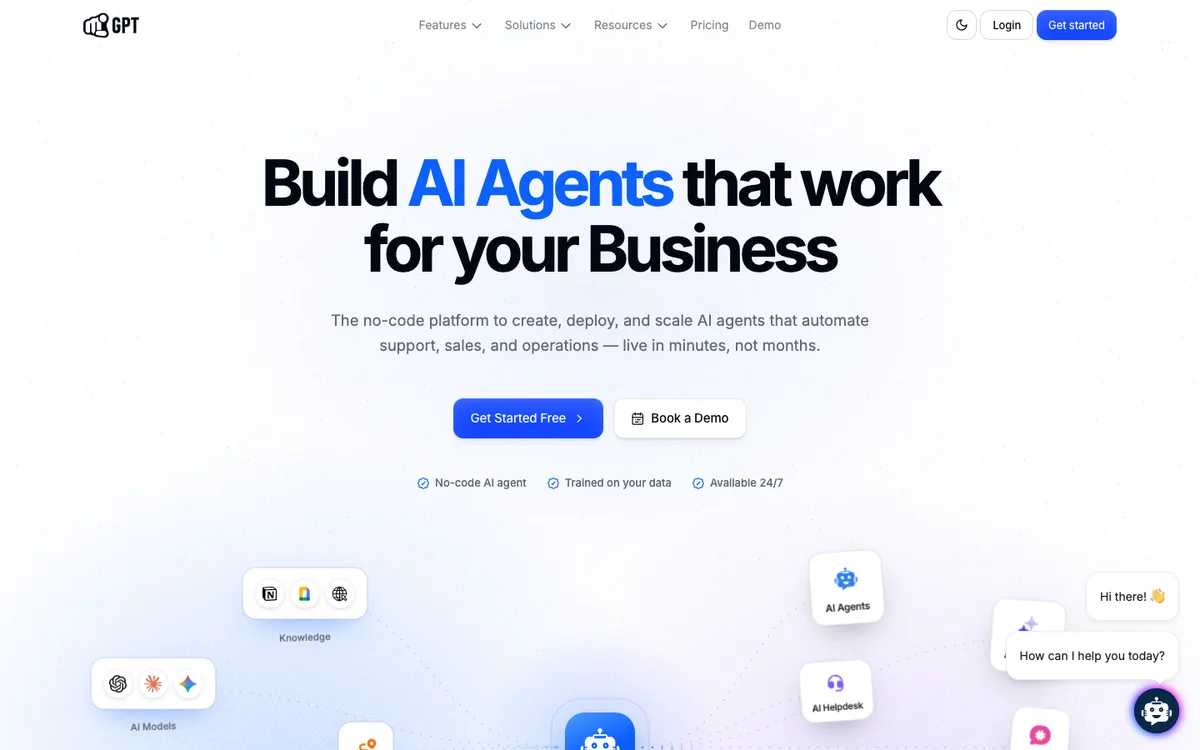
Lo mejor para: SaaS teams that want an AI-first customer-facing agent platform across support, sales, onboarding, and operations.
YourGPT should be evaluated early when a SaaS team wants one AI layer for the full customer conversation, not only a ticket-deflection widget. In an under-$10M company, the same conversation can move from a product question to onboarding help, billing context, expansion intent, or a human handoff. That is where an agent platform is more relevant than a narrow FAQ bot: it can keep the context together and route the next step instead of treating each moment as a separate support problem.
The product direction is broader than live chat. YourGPT's public positioning covers AI agents, AI Studio, AI helpdesk, customer-facing automation, multichannel deployment, and business workflows. For buyers, the practical point is that the platform can support agentic AI and multi-agent workflows shaped around business knowledge, RAG-style grounding, no-code agent building, workflow connections, and human handoff when the conversation should not stay with AI.
YourGPT launched in 2023, so review count should be read as market-distribution context, not as a product limitation against older helpdesk brands. G2 shows 4.7/5 from 22 reviews on its seller/review page at the time of research. The more important test is how well the agent handles your real tickets, docs, pricing questions, handoff rules, onboarding paths, and sales qualification flows.
The main operating requirement is maintenance. YourGPT is not a connect-and-forget platform: teams should keep knowledge sources clean, review failed or escalated conversations, tune workflows, and model AI Credit usage against expected conversation volume.
YourGPT is most useful when a SaaS company wants to avoid stitching together a helpdesk AI add-on, a sales bot, a workflow automation layer, and a support widget. The buyer case is not "cheap chatbot." It is: one AI agent layer can cover more customer-facing work before the company builds a larger support or operations team.
G2 rating: 4.7/5 from 22 verified reviews.
Verdict: Choose YourGPT if your SaaS team wants AI agents to handle customer-facing workflows across support, sales, onboarding, and operations while keeping pricing tied closer to ROI than to separate seats, AI add-ons, and every resolved conversation.
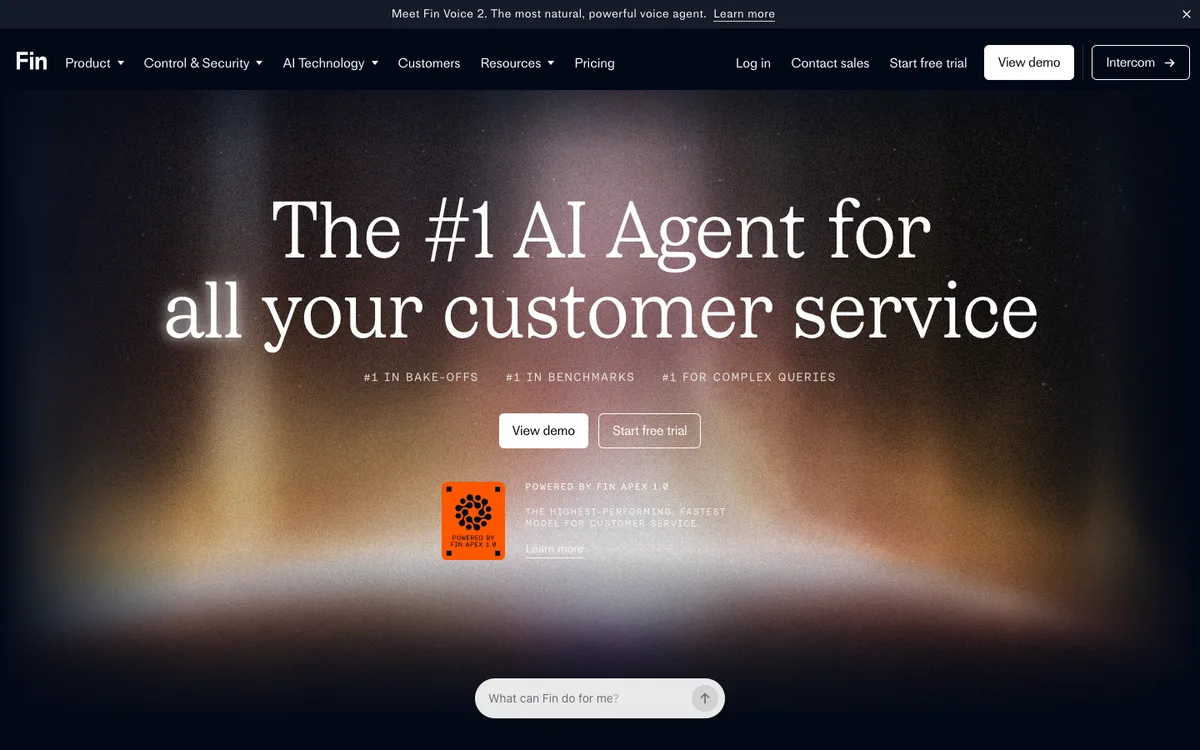
Lo mejor para: SaaS teams already using Intercom-style chat, inbox, help center, tickets, and customer messaging.
Fin is a mature AI support agent for teams that already run customer conversations through Intercom. It can answer from knowledge sources, work across support channels, use workflows, hand off to human teams, and support testing and performance review. In 2026, the naming has shifted: Fin is now a larger company identity, while Intercom remains central to the customer support workspace.
For under-$10M SaaS companies, Fin makes sense when the team already has enough support volume and enough product documentation to justify outcome-based automation.
Intercom-style pricing can become complex. Public materials describe support outcome pricing around $0.99 per outcome, while Fin for Sales can price qualified prospects differently. Add-ons such as Copilot, reporting, outbound messaging, phone, SMS, WhatsApp, and campaigns can change the actual bill.
The issue is not that outcome pricing is bad. It can be fair. The issue is that under-$10M teams need to model it against real support volume, not demo enthusiasm.
G2 rating: 90% satisfaction score cited by Fin.
Verdict: Choose Fin if Intercom already runs your customer conversations and your support volume makes outcome pricing economically sensible. Avoid it if your main priority is a lower-overhead AI agent layer with fewer usage variables.
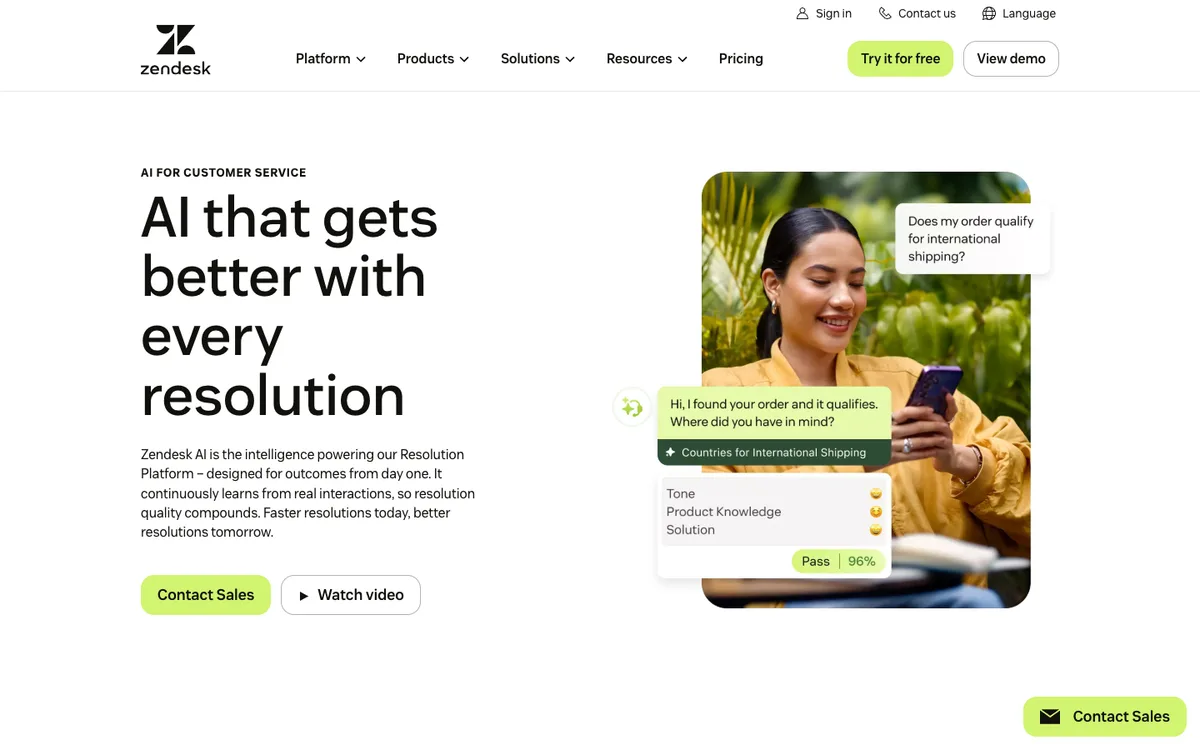
Lo mejor para: SaaS companies that already need mature support operations.
Zendesk remains one of the default systems for ticketing, routing, SLAs, macros, reporting, knowledge base governance, and support operations. Its AI platform has also moved quickly: Zendesk AI agents now operate across messaging, email, web form/API email, and voice preview surfaces, with automated-resolution tiers, agentic procedures, action flows, and QA.
For a SaaS company under $10M, Zendesk is most defensible when support is no longer founder-led and a real support operations owner can maintain routing, macros, docs, AI procedures, QA, and reporting.
Zendesk can be too much platform too early. Public pricing includes per-agent plans, and AI usage now centers on automated resolutions and plan allowances. Add-ons such as Copilot, QA, workforce engagement, contact center, voice, advanced privacy, and services can raise total cost.
Under-$10M teams should ask whether they have the support operations maturity to make Zendesk AI excellent. If not, they may pay for a system they cannot fully operate yet.
G2 rating: 4.3/5 from 6,979 reviews.
Verdict: Choose Zendesk AI when your support operation is complex enough to need Zendesk's structure. For a very lean SaaS team, the admin and add-on gravity can outweigh the benefit.
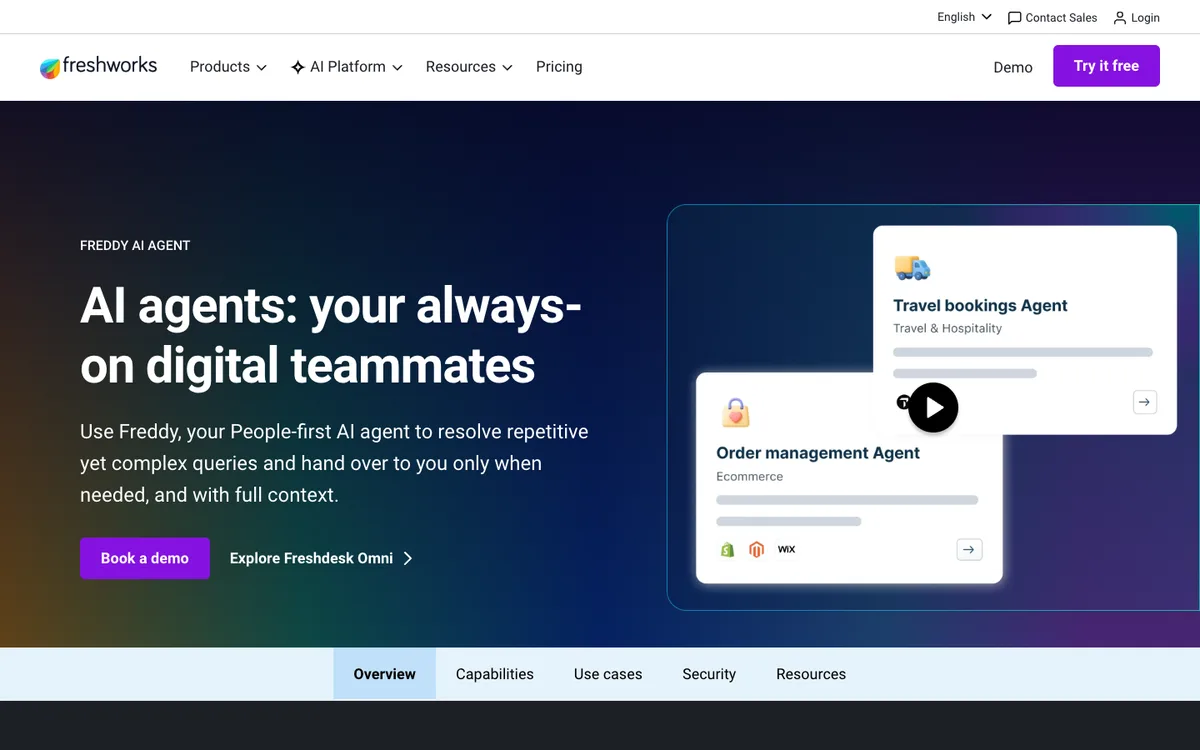
Lo mejor para: SaaS teams that want ticketing maturity and AI assistance at a more accessible price point than some premium suites.
Freshdesk is a practical choice when a company needs a real helpdesk: inboxes, SLAs, routing, workflows, knowledge base, reporting, and multichannel support. Freddy AI adds AI Copilot, AI Agent, and AI Insights capabilities.
Freddy AI is not simply unlimited AI included in every plan. Official materials describe AI sessions, included allowances, AI Agent packs, and add-on logic. Research found session packs around $49 per 100 sessions and public pages that differ by product surface on exactly where allowances apply. Buyers should confirm plan eligibility, included sessions, expiration, auto-recharge, and Copilot pricing before signing.
G2 rating: 4.4/5 from 3,751 reviews.
Verdict: Choose Freshdesk/Freddy AI if you need a structured helpdesk with practical AI. If your primary buying reason is a broad AI-first customer-facing agent, compare total AI session cost and setup effort carefully.
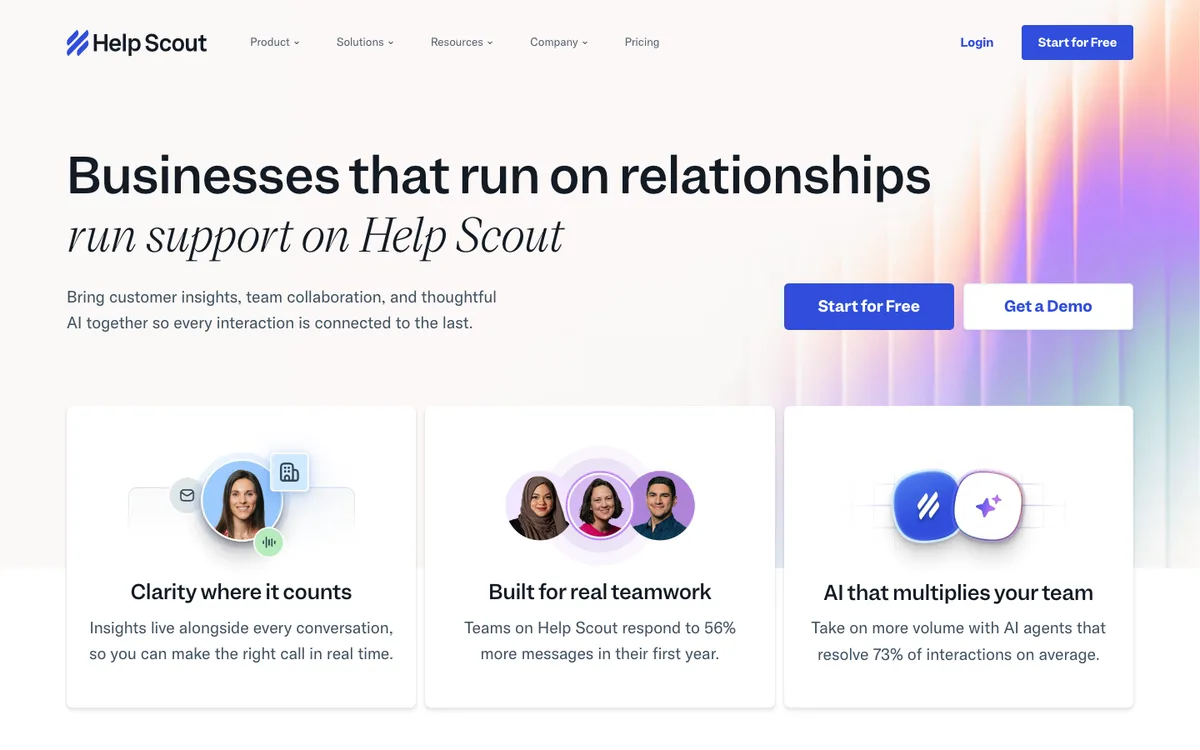
Lo mejor para: SaaS teams that want clean, human support with AI self-service.
Help Scout is not trying to be the heaviest support operations platform. Its strength is a clean shared inbox, Docs, Beacon, and AI Answers that feels approachable for small support teams.
For under-$10M SaaS, Help Scout is a strong fit when the company values support tone, simplicity, and fast setup more than deep backend automation.
AI Answers is usage-based after trial, with public docs describing $0.75 per resolution. AI Drafts can also be billed separately on user-based plans. Extra inboxes, Docs sites, and higher-tier minimums can matter as the company grows.
Help Scout also has less depth for complex automation, backend actions, advanced routing, and heavy reporting than Zendesk or Kustomer.
G2 rating: 4.4/5 from 427 reviews.
Verdict: Choose Help Scout if your SaaS team wants friendly, email-first support with practical AI deflection. Avoid it if you need AI agents to run deeper support, sales, and operations workflows.
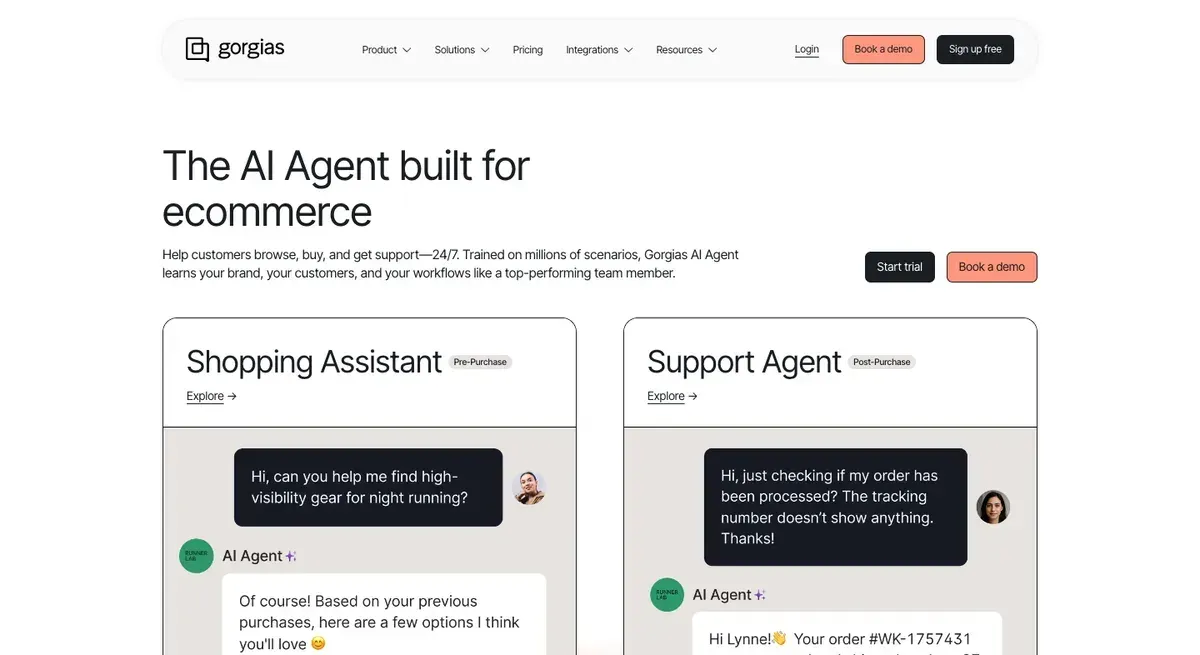
Lo mejor para: SaaS businesses with commerce workflows: orders, subscriptions, shipping, returns, product recommendations, or storefront data.
Gorgias is a strong platform, but it is not a general-purpose SaaS support default. Its best work happens when support is tied to commerce context: order status, returns, subscription edits, discounts, product recommendations, shipping, and shopper history.
That can be relevant for SaaS-commerce hybrids, subscription commerce businesses, marketplace tools, or software products deeply tied to Shopify-style workflows. It is less compelling for pure B2B SaaS support where most questions involve onboarding, technical troubleshooting, billing rules, account admin, and product feedback.
Gorgias uses ticket-volume helpdesk pricing and AI-resolved interaction pricing. Public materials describe AI Agent pricing around $0.90 to $1.00 per resolved interaction depending on plan context, and billing docs note that a fully AI-resolved ticket can count against both helpdesk ticket volume and AI automation billing.
That does not make the model wrong. It makes modeling mandatory.
G2 rating: 4.6/5 from 560 reviews.
Verdict: Choose Gorgias only if your SaaS support work behaves like commerce support. For pure SaaS, it is usually too specialized.
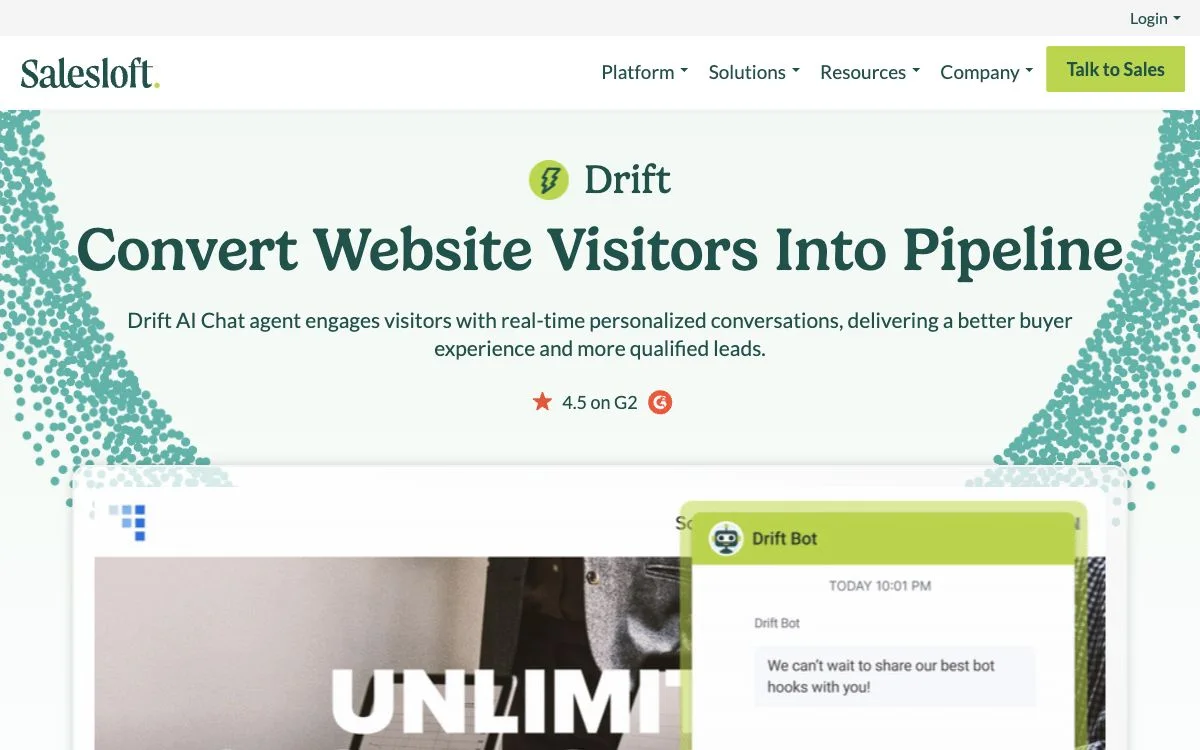
Lo mejor para: SaaS teams that need website visitor qualification, meeting booking, and sales routing.
Drift, now part of Salesloft, belongs in this comparison because many SaaS teams blur support and sales chat on the website. But Drift should be evaluated as a revenue chat layer, not as a support-first AI helpdesk.
Its public positioning focuses on converting website visitors into pipeline, qualifying leads, routing buyers, booking meetings, and connecting web engagement to revenue teams.
Current public pricing is sales-led. G2 lists Drift Premium from $2,500/month, with higher plans requiring sales contact, but buyers should confirm current terms directly. Under-$10M SaaS companies should model Drift against incremental demos booked and pipeline created, not support tickets reduced.
G2 rating: 4.4/5 from 1,256 reviews.
Verdict: Choose Drift if website chat is tied directly to qualified pipeline. If the main goal is support automation, it is usually the wrong center of gravity.
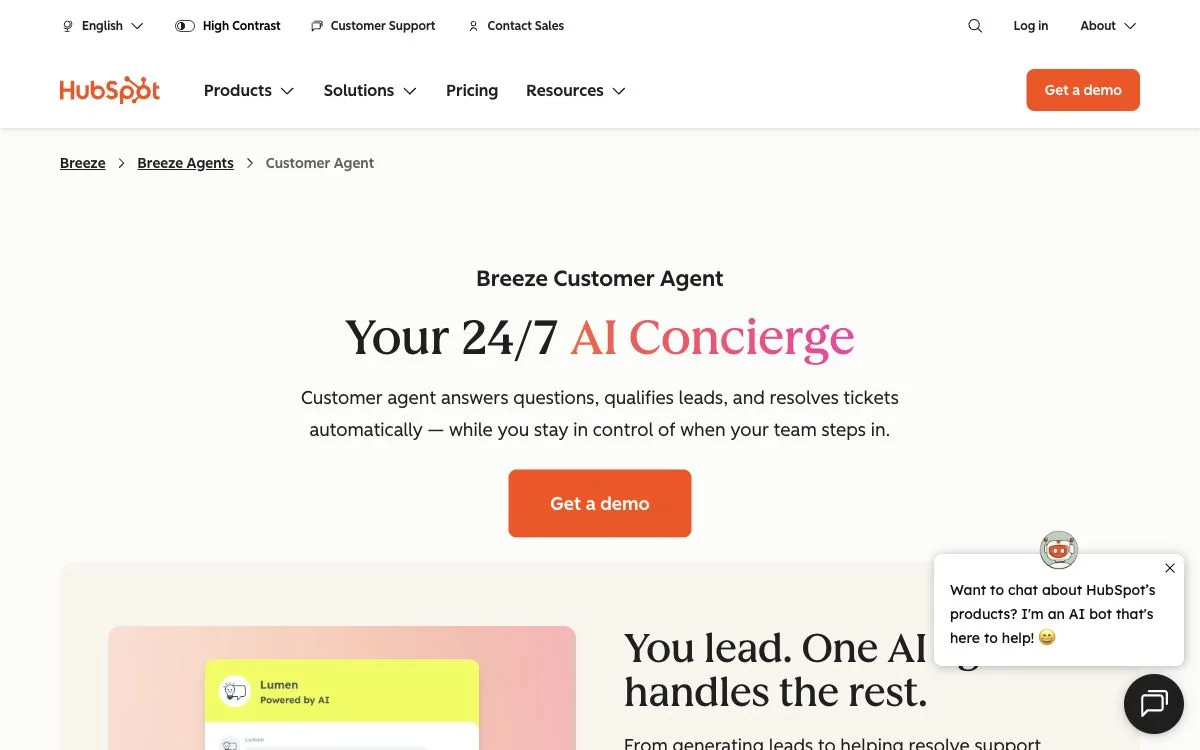
Lo mejor para: SaaS teams that want support automation tied to CRM records, lifecycle data, sales, and customer success.
HubSpot Service Hub is strongest when the company already runs go-to-market work in HubSpot. Breeze Customer Agent can answer from knowledge base articles, website pages, landing pages, blogs, uploaded files, and public URLs. It can ask clarifying questions, cite sources, hand off to humans, and connect to HubSpot workflows.
For under-$10M SaaS, that is valuable when support conversations often become sales, onboarding, retention, or expansion moments.
Public pricing shows Free, Starter, Professional, and Enterprise tiers, but Breeze Customer Agent is meaningfully a Professional/Enterprise motion and uses HubSpot Credits. Research found Customer Agent consuming 50 credits per resolved text conversation, with Professional including 3,000 monthly credits and Enterprise including 5,000. Onboarding fees for higher tiers can also be material.
Buyers should verify final quotes because HubSpot pages can show promotional and catalog pricing differently.
G2 rating: 4.4/5 from 2,879 reviews.
Verdict: Choose HubSpot Service Hub if support, sales, marketing, and success data already live in HubSpot. Avoid it if you only want a lightweight AI support layer.
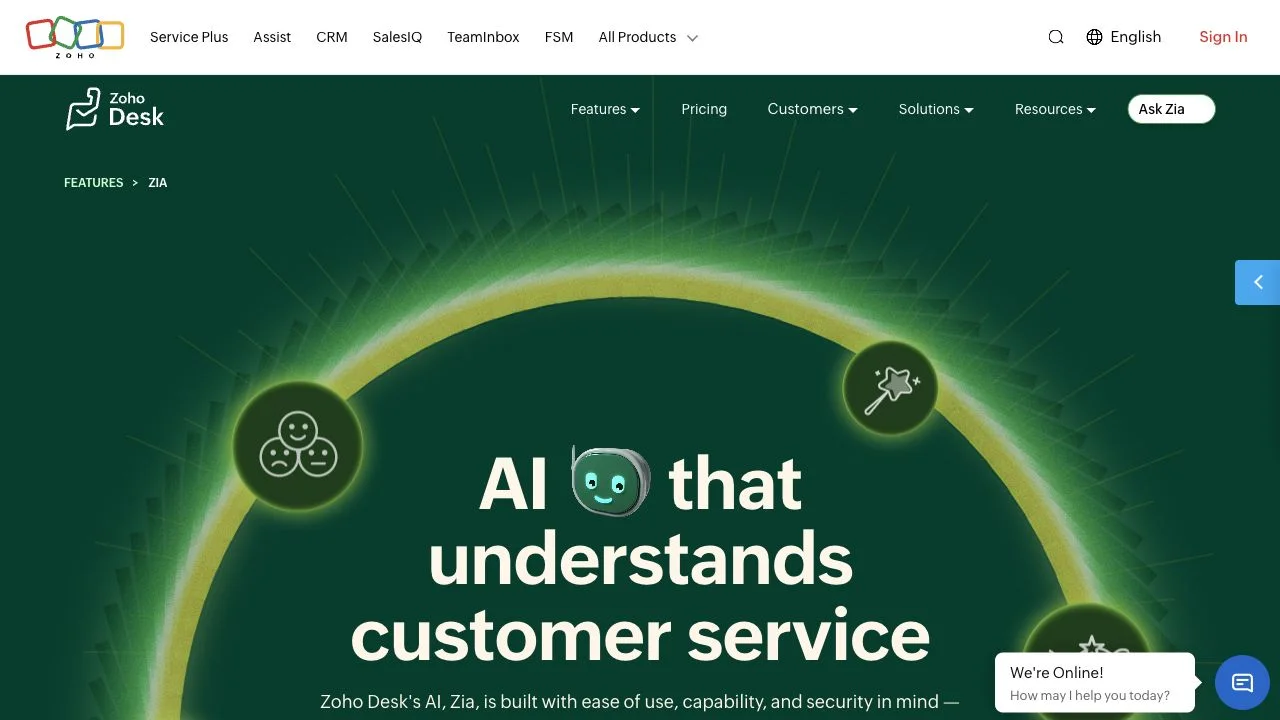
Lo mejor para: Cost-conscious SaaS teams that want a real helpdesk with AI assistance.
Zoho Desk is one of the strongest value picks because it provides ticketing, automation, knowledge base, multichannel support, and Zia AI inside a broader business suite. It is especially attractive if the company already uses Zoho CRM, Books, Analytics, or related products.
Zoho can be powerful but configuration-heavy. Advanced Zia support features are plan-gated, BYOK AI can create separate model bills, free token allowances reset monthly, and regional model availability matters. Teams that want the most polished AI-native support experience with minimal admin work may prefer a more focused platform.
G2 rating: 4.4/5 from 7,551 reviews.
Verdict: Choose Zoho Desk if value matters and your team can configure the system. It is not the cleanest pure AI-support product, but it is hard to ignore for Zoho-leaning SaaS teams.
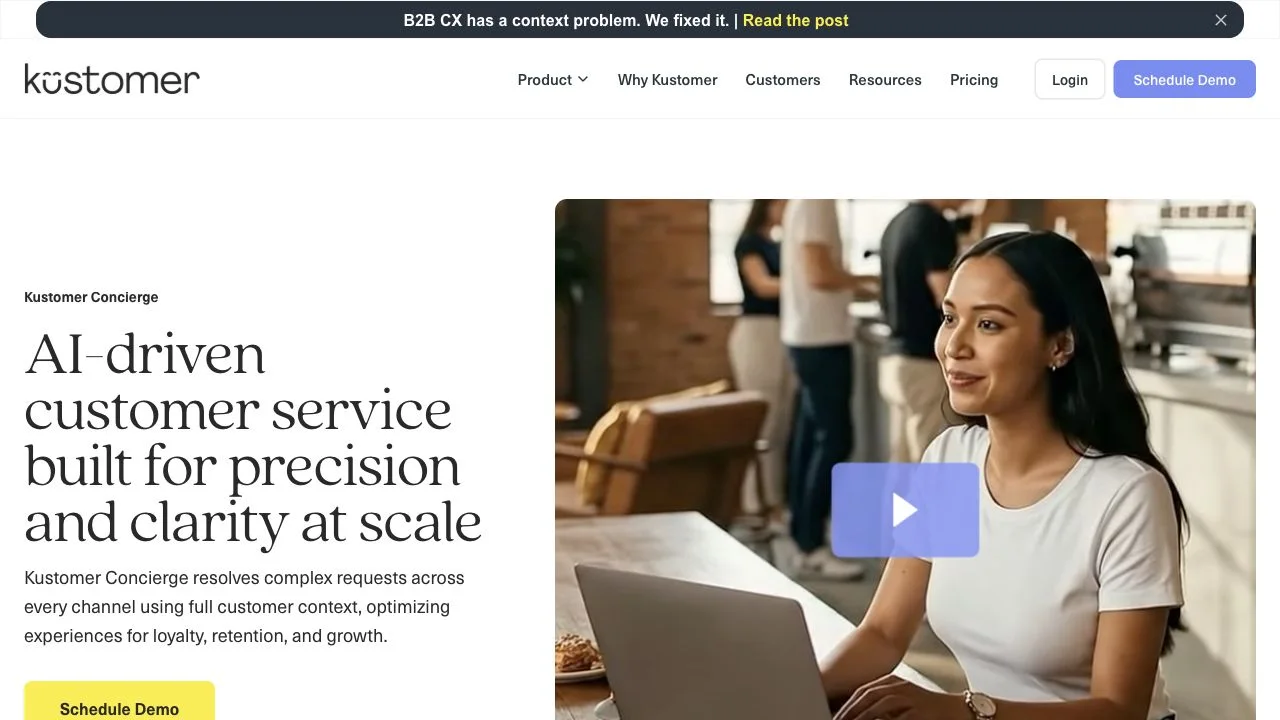
Lo mejor para: SaaS teams that have outgrown a simple inbox and need AI support around full customer context.
Kustomer's current positioning centers on customer-context AI: Concierge for customer-facing automation, Envoy for rep assistance, and Architect for building and improving AI agents, workflows, knowledge, reporting, and automation logic.
The strongest case for Kustomer is when support quality depends on the full customer timeline: prior conversations, purchases or subscription data, account context, channel history, and escalation rules.
Kustomer's public pricing is quote-based. Its pricing page emphasizes AI included across the package, but voice, talk, SMS, transcription, and WhatsApp are pay-as-you-go. Implementation and omnichannel configuration may require paid services. HIPAA-enabled subscription is also listed as an add-on.
That makes Kustomer harder for lean teams to compare until they have a written quote.
G2 rating: 4.4/5 from 555 verified reviews.
Before buying, estimate ROI using real inputs:
| Entrada | Example question |
|---|---|
Monthly support conversations | How many customer conversations could AI attempt? |
Repetitive-ticket share | What percent are repeatable product, billing, setup, or docs questions? |
Safe automation share | What percent can be answered without account-specific risk? |
Calidad de escalamiento | Does the agent summarize and route correctly? |
Human time saved | How many agent hours disappear each month? |
Avoided hiring | Does automation delay one support hire by 3 to 6 months? |
AI cost | Are you paying by seat, outcome, session, credit, ticket, or channel? |
Setup labor | Who maintains docs, tests answers, and reviews failed conversations? |
Revenue upside | Does the agent qualify leads, recover onboarding drop-off, or route expansion interest? |
Simple ROI formula:
| Cálculo | Formula |
|---|---|
Monthly labor value saved | Hours saved x loaded hourly support cost |
Monthly revenue value | Qualified demos or saved accounts x expected value |
Monthly platform cost | Base plan + seats + AI usage + add-ons + channel fees |
Net monthly value | Labor value + revenue value - platform cost - maintenance time |
If the platform saves time but creates a surprise usage bill and a weekly admin burden, the ROI is weaker than the demo suggests.
Ask every vendor these questions before signing:
Use this as the practical shortlist:
For most SaaS companies under $10M, the final demo shortlist should be three tools, not another full category map.
Start with YourGPT if you want AI agents that can handle customer-facing workflows across support, sales, onboarding, and operations without buying a heavy enterprise support suite. The case for shortlisting it is practical: it covers more than ticket deflection, gives teams room to model cost around AI usage, and can extend into product-native experiences through the free, open-source YourGPT Copilot SDK, which lets SaaS teams add intelligence that can understand frontend context, call backend tools, and live inside the product experience.
Start with Fin if Intercom already owns your customer communication layer and your support volume makes outcome pricing attractive.
Start with Zendesk AI if the buying reason is mature ticketing and a support team that can operate a heavier helpdesk stack.
The safest buying move is to pilot two or three tools with the same 50 real conversations, the same docs, the same escalation rules, and the same cost model. The platform that wins that test is the one most likely to help your under-$10M SaaS company scale support without building a support team too early.
YourGPT is a sensible starting point for SaaS teams that want an AI-first customer-facing agent across support, sales, onboarding, and operations. Fin, Zendesk, Freshdesk, Help Scout, HubSpot, Zoho Desk, Gorgias, Drift, and Kustomer can be better fits when their operating model matches your team.
Choose a helpdesk AI add-on if your helpdesk is already the center of support operations. Choose an AI-first platform if your team wants the agent to cover support, lead capture, product guidance, onboarding, and workflow automation across channels.
Not always. Per-resolution or outcome pricing can be fair when it replaces expensive manual work. It becomes risky when ticket volume is unpredictable, when sales qualifications cost more, or when add-ons make the real invoice hard to forecast.
Use real conversations, not perfect FAQs. Test setup questions, billing questions, integration issues, plan limits, account access, angry customers, sales-intent messages, and bugs. Score accuracy, escalation quality, admin visibility, time saved, and cost per useful resolution.
Both matter, but they answer different questions. G2 shows buyer sentiment and adoption. AI capability must be tested with your docs, your tickets, your customers, and your escalation rules.