Definition for business buyers
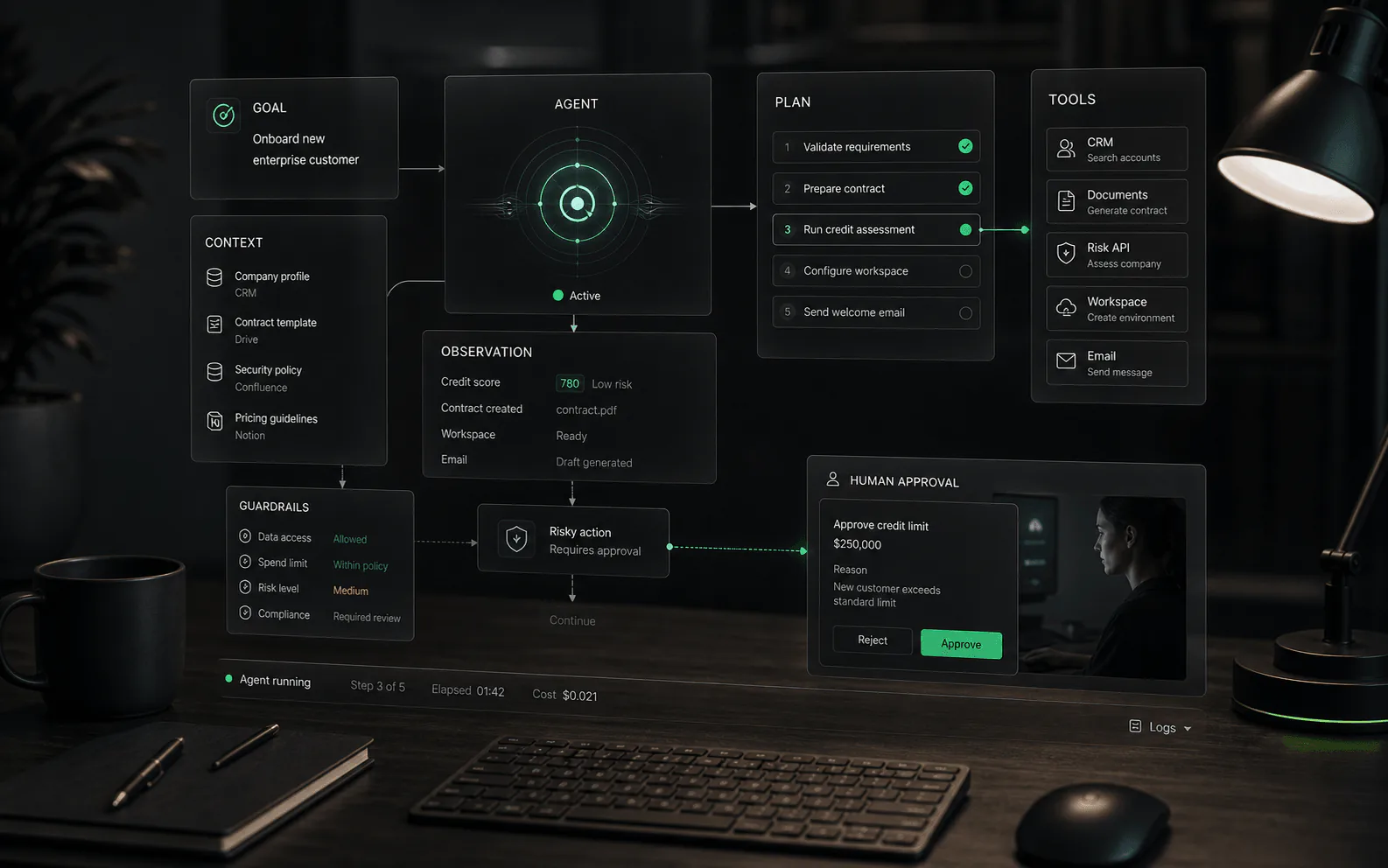
An AI agent platform gives teams a controlled environment for turning AI from a standalone chat experience into an operating layer. The platform usually manages knowledge sources, prompts or instructions, channels, tools, permissions, handoff paths, analytics, testing, and improvement loops. The platform matters because the model alone does not decide how the agent should behave inside a real business process.
Core platform layers
- Design layer: teams define the agent's goal, allowed behavior, escalation rules, tone, test cases, and workflow boundaries.
- Knowledge layer: the platform connects approved sources such as help centers, documents, product data, policies, or internal systems.
- Tool layer: the agent can call APIs, update records, create tickets, route cases, draft replies, or trigger workflows when allowed.
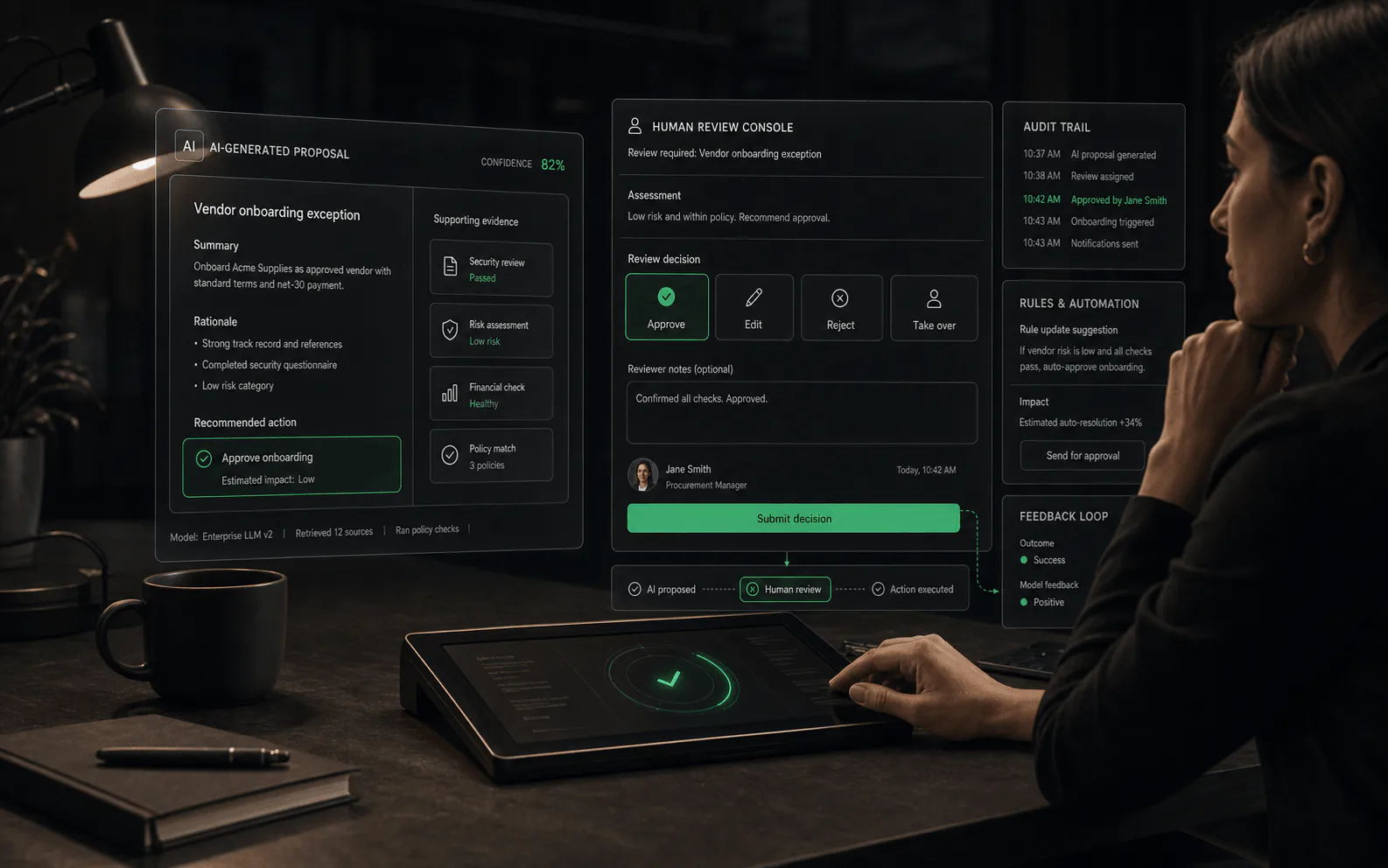
- Control layer: permissions, human review, audit logs, confidence rules, fallback behavior, and data-access boundaries keep automation accountable.
- Experience layer: the agent appears in web chat, email, WhatsApp, helpdesk inboxes, internal tools, or APIs.
- Improvement layer: analytics, transcripts, failed queries, source gaps, and reviewer feedback help teams improve the agent after launch.
What an AI agent platform is not
It is not just a model, a prompt, or a chat widget. A model generates or reasons. A prompt guides behavior. A widget gives users a place to talk. The platform coordinates the operating environment around the agent: what it knows, what it can do, where it works, who supervises it, and how the business learns from mistakes.
Common use cases
- Customer support: answer from approved help content, classify issues, escalate with context, and surface knowledge gaps.
- Ecommerce service: handle order questions, return flows, product guidance, shipping issues, and refund boundaries with store context.
- Sales and revenue: qualify leads, answer product questions, route prospects, book meetings, and summarize handoffs.
- Internal operations: retrieve policies, draft employee-service responses, route requests, and support repeatable back-office workflows.
- Agent assist: help human teammates with suggested replies, summaries, source lookup, and next-best-action guidance.
The evaluation problem
Most AI agent platforms sound similar in a vendor demo because they all promise automation, integrations, analytics, and better customer experience. The meaningful differences appear in edge cases: stale sources, restricted data, conflicting policies, angry customers, billing disputes, tool failures, channel gaps, and handoff quality. Buyers should test those moments before trusting the happy path.
What strong platforms make visible
- Which source or record supported the answer.
- Which action the agent took or proposed.
- Why a case escalated or did not escalate.
- Who approved a sensitive response or workflow action.
- What the agent could not answer.
- Which source, prompt, workflow, or integration needs to change after a failure.
How to decide if you need one
You probably need an AI agent platform when a simple chatbot cannot safely complete the work: the agent needs current business knowledge, customer-specific context, system access, channel coverage, approval rules, analytics, and ownership after launch. If the use case is only public FAQ answering, a lighter chatbot may be enough.
Sources to verify
Use these references to verify definitions, risk guidance, and product-evaluation criteria before applying the framework to a live vendor shortlist.
FAQ
Common questions
What does an AI agent platform do?
It helps teams build, deploy, control, and improve AI agents that use business knowledge, workflow rules, integrations, and human handoff to perform defined tasks.
How is an AI agent platform different from a chatbot builder?
A chatbot builder usually focuses on conversation design and simple responses. An AI agent platform usually adds deeper knowledge retrieval, tool use, workflow actions, permissions, analytics, and human oversight.
What teams use AI agent platforms?
Support, ecommerce, sales, operations, IT, and customer success teams use AI agent platforms when they need automation that works across knowledge sources, customer channels, and business systems.
What is the biggest risk when buying an AI agent platform?
The biggest risk is approving automation without testing source quality, permissions, escalation, tool failures, pricing at scale, and ownership after launch.
Buyer tools
Compare by workflow, not by hype.
Use the methodology to evaluate channels, automation depth, handoff, integrations, and implementation fit before shortlisting a platform.